Introduction
Trade policy in economics is an extremely contentious issue; at the center of the debate lies the question: would elimination of tariffs and quotas correspond to lost jobs? Many economists believe that trade liberalization creates efficiency and lowers prices, while others are more concerned about job loss in domestic markets that are exposed to foreign competition. We are trying to answer that question here, along with other questions about the economics of tariffs, their impact, and general economic effects.
Job Impact of Eliminating Tariffs and Quotas
Wouldn’t eliminating tariffs and quotas correspond to lost jobs?
Yes, in some sectors. Industries that depend on trade-well protection, including steel, textiles, and certain kinds of manufacturing would see reductions in jobs, in those industries, due to domestic goods being outcompeted by international competitors selling less costly items. Yet other sectors, especially industries that use imports as inputs or benefit even more from increased exports from the diminished imports, would either stop or expand employment. Economists call this creative destruction: jobs lost in one sector, but new jobs created in another sector.
A 2025 economic review highlighted this phenomenon, revealing job losses in highly-protected sectors such as textitles, at the same time as increases in advanced manufacturing and logistics arising from global supply chain dislocations, which happened concurrently. This reallocation illustrates the notion of “labor market churn,” where the economy reordinates its resources as opposed to just destroying them.
Would eliminating tariffs and quotas lower consumer prices?
Generally, yes. Tariffs act like taxes on imports, and so removing tariffs will reduce prices and costs which will ultimately be reflected in consumer prices with reduced costs as a result.
We can confirm that via inflation reports dated in 2025. With import tariffs, the May 2025 year-over-year core inflation rate for the US rose to 3.5%, putting considerable strain on consumers. Studies similarly find that tariffs are highly regressive, hitting low-income households especially hard in this case who spend more household income on imported goods.
Would removing tariffs and quotas be more efficient overall?
Yes. Free trade allows countries to concentrate on what they produce better. This leads to higher productivity, which can increase GDP in the long-run.
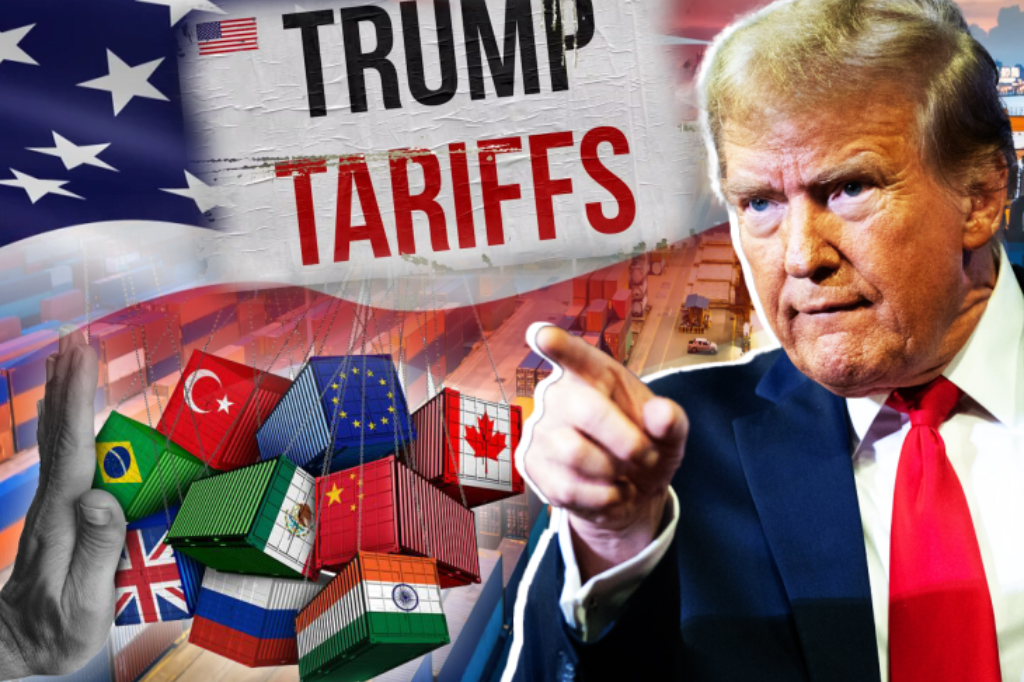
Tariffs in the real world – Trump’s Policies and Questions
Would Trump’s tariffs work?
It depends on your objective. If the objective is to protect domestic industries for a while, tariffs might work. However, if the objective is longer-term jobs or a level of economic self-sufficiency, the outcomes are mixed and more difficult to ascertain. Many of Trump’s tariffs resulted in retaliatory tariffs from trade partners, caused disruptions to the supply chain, and made goods more expensive to domestic producers and consumers.
The House of Representatives in the United States recently approved a tariff proposal for the 2025 tax year which would impose 10% across-the-board tariffs on imports. Economic analysts have warned these tariffs could lead to greater inflation, a loss of export competitiveness, and retaliatory tariffs from trade partnerships such as China and the EU.
Would Trump’s tariffs trigger a recession?
Not on their own, but if they led to a full-blown trade war with major partners, like China, it could trigger reduced demand and increased uncertainty (which may weaken investment) and slow down the economic.
U.S. GDP fell by 0.3% in Q1 2025, which brought stagflation concerns to the forefront. Stagflation is a combination of high inflation and stagnant economic growth that is hard to come across. A group of economists on the economic forecasting panel at the Conference Board has voiced concern about the potential effects of tariffs throughout the economy. Tariffs could discourage consumers from spending and raise businesses’ production costs.
Would Trump’s tariffs for Mexico include maquila (maquiladora factories)?
Maquila factories typically operate on a duty free basis under USMCA. Depending on the tariffs, blanket tariffs would likely apply to the maquilas unless explicitly excluded.
Would Trump’s tariffs be in violation of USMCA or NAFTA?
Unilateral tariffs could, depending on the circumstances, violate trade agreements such as USMCA. In general, a unilateral tariff may not cause a violation, if some type of justification is made on national security or emergency grounds.
Wider Economic Effects
Would tariffs lead to a stronger dollar?
Potentially. Tariffs can reduce demand for foreign currency, meaning they increase the value of the dollar by reducing total consumption of foreign currency. But retaliatory tariffs and hope that it just drops can negate this.
Would tariffs increase prices and inflation?
Yes. Tariffs increase import prices and the costs are routinely passed on to consumers, which is probably the most direct inflationary effect from protectionist policies.
This became clear over the year 2025 as the prices for basic goods such as food, electronics, etc. continued to rise at major U.S. retailers. The consumer price index (CPI) continued to increase in the first half of the year as new tariff measures were introduced and retaliatory global trade barriers were applied.
Would tariffs benefit the U.S. economy?
Short term benefits can be found in selected sectors, however economic consensus shows tariff will het overall productivity, innovation and competitiveness.
Would tariffs stimulate manufacturing based in the U.S.?
In theory yes, but only under the assumption that firms would perceive that protection were long term and predictable. In reality firms would take that into consideration and possibly would pivot toward automation or move again if domestic costs remain high.
Would tariffs increase inflation or recession?
Tariffs can contribute to increasing prices, thereby affecting some level of inflation. If tariffs reduce consumption or elicit retaliatory tariff the total economic output could decline hence triggering recession
Specific Sectors and Questions
Would tariffs affect used vehicles, auto prices, or gas prices?
Yes. Tariffs on imported vehicles and/or imported parts, would only affect auto prices as both new and used vehicles would go up. Gas prices may be indirectly influenced if oil trade relates changes or costs of input rise.
Would Walmart, Amazon or eBay be affected by tariffs?
Yes. Retailers rely upon global supply chains and the additional costs will be felt by consumers. The additional costs could also change consumer behavior related to online shopping options.
The above effects were evident in 2025. National retailers like Walmart and Amazon shifted pricing policies early on due to new tariffs, especially on Chinese imports. The price increases on electronics, clothing, and appliances caused alterations in consumer behavior, and greatly increased interest in domestic alternatives.
Would video game prices, alcohol or food go up because of tariffs?
Yes, if the inputs or finished products are imported. Tariffs can apply to electronics, agricultural or food products, alcohol, wine and whiskey from Europe.
Hypothetical & Historical Questions
Would replacing the income tax with tariffs work?
Unlikely. Tariffs cannot provide the same revenue base as income tax without crushing trade. Additionally, tariffs are regressive as lower income households are hit harder with the average rate.
Would Henry Hazlitt concede that tariffs create jobs?
No. In “Economics in One Lesson,” Hazlitt identifies that tariffs create jobs in the protected industry but destroy jobs elsewhere and reduce the net economic welfare.
Would the Morrill Tariff pass the Senate today?
Probably not. Today trade policy is under many international agreements and is driven by interdependence of economies making it politically and economically easier for politicians to enact customs free trade agreements or low tariffs.
Conclusion
Tariffs and quotas are powerful and potent form of trade influence. They can provide limited temporary protection to certain industries, but their overall influences are long term and negative – raising prices, undermining international relations, and shifting rather than creating jobs.
The trade elements in 2025 back these expectations. However much they appeal politically, the tariffs now imposed are raising consumer prices and squeezing businesses and households in the U.S. At the same time, each time global trade tensions reemerge, economists recommend a flexible and long-term policy orientation on competitiveness and collaboration, not isolation.
Ultimately, the answer to the question “Would eliminating tariffs and quotas mean lost jobs?” is complicated. Some jobs would be lost, but many more may be created in other areas, provided that policies encourage a smooth transition, education to support those transitions, and investment made into competitive industries.
Read about: Why Millions in the UK Are Turning Flexitarian?
 Xorvex
Leave a comment