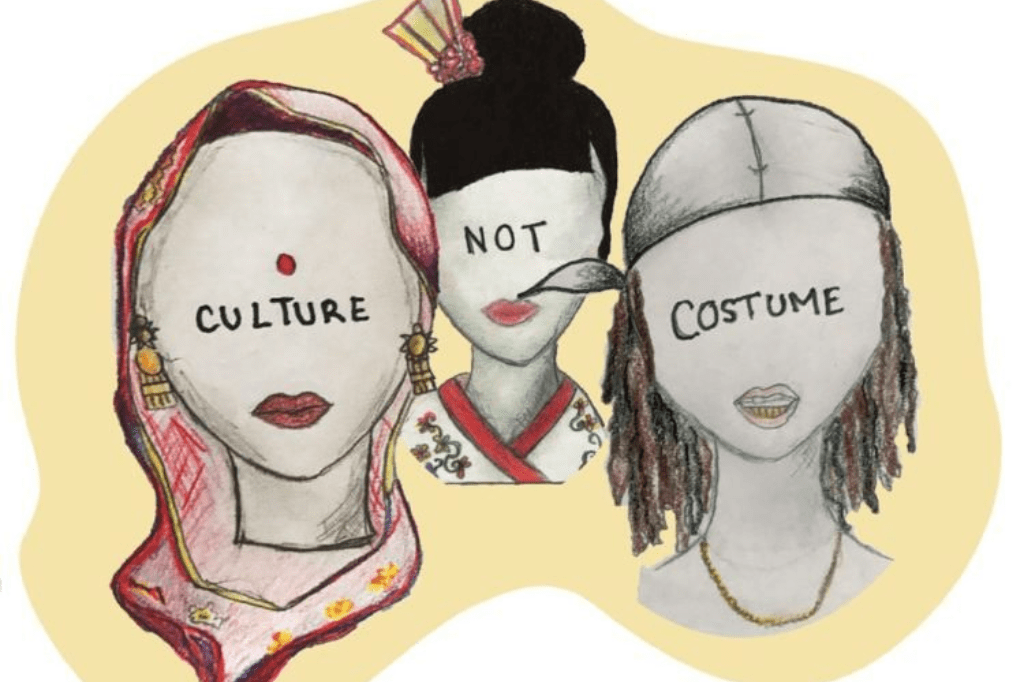
Cultural appropriation incites passionate debate, sparkling social media and public discussions, but what does it mean? When does appreciation become appropriation? What elements of culture become problematic because others take them on board? Let’s unpack this, demonstrating well-known examples, while illustrating the difference between honoring a culture, and appropriating it.
What Does Cultural Appropriation Mean?
Cultural appropriation is when you take or use from a culture which isn’t your own, particularly without understanding, acknowledging or respecting the original context. This can be anything from fashion, symbols, art, language, rituals, or food.
While teaching or learning about your culture is not something that would negate the learning process but the issue arises when a dominant culture uses parts of a marginalized culture in a way that takes the original and contextual meaning away, commodifies sacred practices, or reinforces stereotypes.
Definition of Cultural Appropriation
The definition of Cultural Appropriation is, “Cultural appropriation is the appropriation or unacknowledged adoption of cultural expressions, practices, or symbols from one culture by a member of a different culture, usually one containing more social or economic power”.
Why is Cultural Appropriation wrong?
Cultural appropriation can:
- Completely erase the original meaning and significance of a cultural object.
- Perpetuate or trivialize sacred practices.
- Allow one group to profit from something while the originators face discrimination for the same.
- Reinforce harmful stereotypes and systemic inequalities.
Is Cultural Appropriation Racist? Is It the Same as Racism?
It is necessary to note that while cultural appropriation may not always be directly racist, it typically reinforces and is exemplifying systemic racism. In some sense, it is not the same thing as racism, but it operates within racist systems. For example, braids and locs, or dreads, are often labeled “unprofessional” on Black individuals while reported to be trending when worn by white celebrities.
What Are the Four Types of Cultural Appropriation?
- Exchange Without Understanding – Using things, or practices without the context or knowledge
- Stereotyping – Using cultural things to create or reinforce negative stereotypes or stigmas about that culture
- Exploitation – Using another culture to make a profit but without sharing the benefits of that profit towards the original culture.
- Erasure – Overwriring or ignoring all of the original significance and its origin it had for the cultural element.
What Is an Example of Cultural Appropriation?
An example is that there are music festivals where people but on a Native American headdress as a fashion statement. Even if Native American headdresses have a deeper ceremonial meaning and are traditionally earned for acts of bravery and not who wore it the best on a weekend at a festival.
Cultural Appropriation vs Cultural Appreciation
Cultural Appropriation
- Uses aspects of another’s culture without understanding or respect
- Turns typically sacred or meaningful practices into trends
- Can exploit marginalized communities for profit or aesthetics.
Cultural Appreciation
- Learns about and respects a culture
- Gives credit, respects context, supports the cultural community
- Creates meaningful respectful engagement.
Fashion & Beauty: When is it appropriation & when is it appreciation?
Are Braids, Dreads, or Cornrows Cultural Appropriation?
The meanings of braids, locs (or dreads), and cornrows have, and still hold deeper meanings in African communities. For example, when a non-Black person wears braids or locs and refuses to acknowledge their history and how it affects the discrimination Black people face for wearing the same hairstyles.
What About Dutch, Box, or French Braids?
Dutch and French braids originate from Europe and are generally recognized by other cultures and are not really considered appropriation. There are historically African “box braids”, which are more problematic when worn outside that culture unless the person understands their historical and political significance.
Is It Cultural Appropriation To Wear a Bonnet or Hair Wrap?
Bonnets and wraps are also protective hairstyles often worn by Black women. Appropriation occurs when they are commodified or worn as a fashion item without an understanding of their cultural need in everyday use.
What About Headscarves?
Headscarves are worn in many cultures, from Middle Eastern hijabs to African geles, to European babushkas and Mediterranean headscarves. Context and styling matters. Wearing a hijab as fashion, for example, could be offensive especially when Muslim women are discriminated against because they choose to wear it for religious practice.
How to Wear a Headscarf without Appropriating
- Learn the cultural context.
- Don’t use sacred or religious symbols, unless you are a practitioner.
- Support artisans or brands from that culture.
- Don’t treat it as a costume.
Wellness, Spirituality, and Lifestyle: What a Fine Line There Is
Is Henna Cultural Appropriation?
Henna is a natural dye used for religious ceremonies, weddings, and festivals in South Asian, Middle Eastern, and North African cultures. If you buy henna and the artist is a traditional henna artist while you are learning the significance of what henna represents, it is appreciation and not appropriation.
Henna is often viewed as bohemian body art, but there is much more meaning and importance behind henna. If you are using henna in a culturally informed manner (i.e., you are getting henna at a South Asian wedding), then you are participating and appreciating the art form, not appropriating.
What About Yoga?
Yoga originates from an ancient Indian philosophy and spirituality, deeply rooted in Hinduism. To respectfully engage with yoga means to learn its origins, rather than simply using it as workout. The most significant way to engage with yoga, and respect yoga origins is to give credit to its religious origins, and not commercialize sacred words and symbols.
To honestly respect yoga, you should use the correct Sanskrit terminology, pronounce them honorably, and know their meaning, rather than treating them like fashion labels. For instance, the main words like namaste, chakra, and Om should be accompanied by an awareness of their spiritual significance. Treating yoga as a complete practice (not merely a movement practice but one with a sense of devotion and a catalyst for self-realization), is a great way to respect its roots.
Is Smudging Cultural Appropriation?
Smudging is a sacred Indigenous practice used by many First Nations, Métis and Inuit communities for spiritual purification, healing and relationship with a creator. Smudging usually involves burning a sacred plant in one of prescribed combinations (frankly, any combination of plants will do); usually white sage, sweetgrass, cedar, or tobacco; all of which carry their own spiritual significance and purpose.
To use white sage or engage in smudging rituals without any comprehension of the spiritual significance, especially if primarily used either aesthetically, commercially, or because it is “trendy” is cultural appropriation. This is harmful to the Indigenous cosmology, especially when taking into consideration the historic marginalization, oppression, and genocide of Indigenous peoples. A spiritual practice, which was once illegal, and continues to be misunderstood and disrespected.
Is Wearing a Kimono or Turban Cultural Appropriation?
Kimonos originate in Japan and can be worn on Dyka, or other formal occasions, but only on formal occasions. Therefore, wearing a kimono with knowledge and in that setting (for example a Japanese tea ceremony, or cultural call) is appreciation, and not appropriation.
Similarly, turbans are worn by many South Asians, Middle Easterners, and Africans for cultural or religious reasons. For example, wearing a turban as a costume or trivializing in other ways is insensitive.
Are Pashminas, Talking Sticks, or Rice Hats Cultural Appropriation?
It all depends on the context. For example, wearing a pashmina as a round scarf is perfectly fine, however, if you are selling it as an exotic accessory then it may become exploitative. On the other hand, using a talking stick in a non-Indigenous space in the name of “healing” when this stick is very sacred and ceremonial is appropriation.
What about an Ofrenda?
Creating your own Ofrenda (an altar taken for Day of the Dead) without knowing about an Ofrenda’s sacred meaning is unacceptable. On the other hand, if you were to do the Ofrenda as part of a Day of the Dead event, and if it was done respectfully, then it would be pure appreciation.
Celebrations & Costumes: Harmless Fun or Harmful Stereotypes?
Is Wearing a Lei at Graduation Cultural Appropriation?
No, wearing a lei at graduation is culturally appropriate, so long as it represents respect and understanding! In fact, gifts of flowers and leis, especially in graduation ceremonies, are symbols of love, honor, congratulations, and good luck that are shared and passed along in communities in Hawaii and other island cultures and histories in the Pacific.
Leis are traditionally gifted at milestones in life, and many Pacific Islander families proudly carry that tradition to the location they now live, regardless of the distance to their home region. Students and graduates of all colors and backgrounds are more often seen wearing leis in spaces where Polynesian communities are more concentrated, even if those are largely white communities.
Are Pashminas, Talking Sticks, or Rice Hats Cultural Appropriation?
- Pashminas are a kind of shawl from South Asia, primarily Kashmir region which is part of India. Using them as a blanket for warmth, or as a trendy accessory doesn’t generally amount to appropriation, especially if the pashmina was ethically acquired. But ignoring the origins or using pashminas as a simple, ‘on-trend’ or fashionable accessory.
- Talking sticks are found in Indigenous traditions, primarily in Northern America. They come from a sacred and ceremonious framework in which they are used to show respect for one another when speaking. Using a talking stick where it is void of that spiritual/cultural significance, such as in a corporate meeting or casual gathering, can be seen as appropriation.
- In many Asian countries, including Vietnam, China, the Philippines, and many more, rice hats (the term is a Westernized term for a conical shaped Asian hat) are worn for practical reasons, such as protection from the sun. Using a rice hat as intended, such as wearing it while traveling in Vietnam or participating in someone else’s cultural exchange, tends to be acceptable.
Philosophical & Controversial Questions
Is Cultural Appropriation Real?
Yes! It is widely acknowledged in the academic, activist, and cultural leadership spheres around the world. It involves power dynamics, context, and respect.
Why Is Cultural Appropriation Bad?
Cultural appropriation reaffirms colonial perspectives, erases minority perspectives, and profits the appropriator but marginalizes the originator.
Is Cultural Appropriation Harmful?
Yes, it can:
- Undermine cultural integrity of traditions.
- Exacerbate racial and cultural disparities.
- Cause emotional trauma to people whose cultures are misrepresented.
Is Cultural Appropriation Moral?
In general, no, unless it is a cultural exchange with awareness / mutual engagement, and respect. The moral route is cultural appreciation, not discovery through appropriation.
- Am I Culturally Appropriating?
- Ask yourself the following questions:
- Do I know the meaning of this cultural element?
- Am I representing it in an informed, respectful way?
- Would someone from that culture be offended?
- Am I profiting from something for which others are marginalized?
Conclusion
The difference between cultural appreciation and cultural appropriation can be fuzzy, and intention, respect and context are important. When we participate in cultures, we can also engage in ways that honor their histories and peoples. We can learn from them, credit them, support cultural producers, and always ask, Am I celebrating this culture or exploiting it?
Henna, yoga, and other practices should not be viewed as absolutely off-limits as a non-member of that culture. However, the difference in how we participate is profound. Appreciation creates connection and Unchecked appropriation can create larger divides. Let’s make thoughtful choices.
 Xorvex
Leave a comment