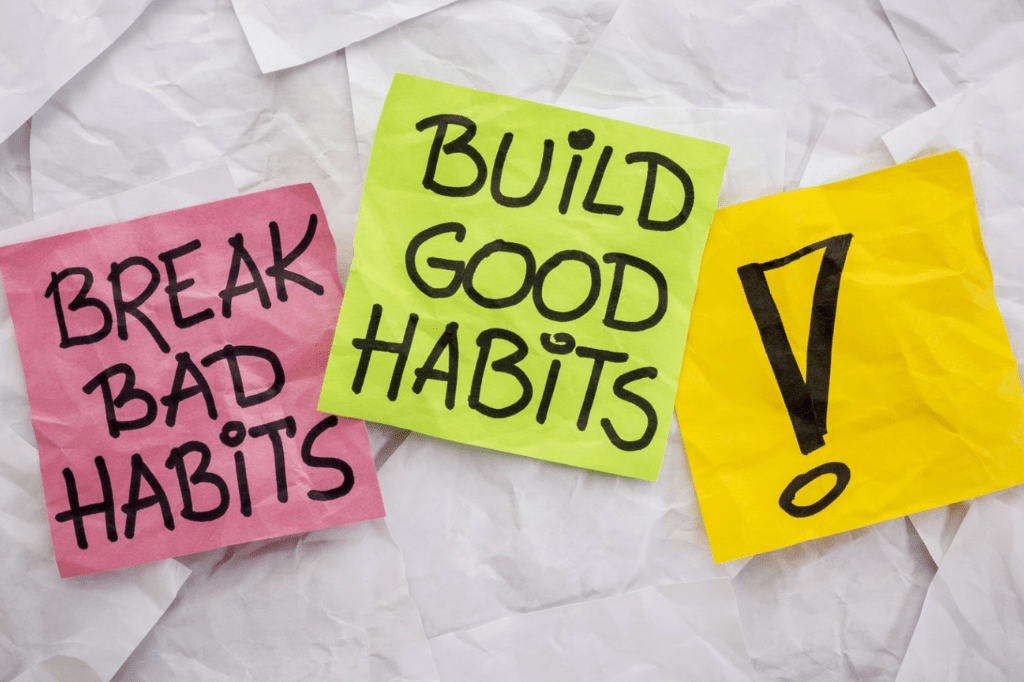
We all have habits. Some good. Some… not so much. Morning routines, nail-biting, daily walks, doom-scrolling—we repeat these behaviors day after day, often without thinking. But have you ever wondered why habits are so hard to build or even harder to break? The answer lies deep in your brain.
Understanding the neuroscience of habits doesn’t just explain your behavior—it gives you the power to change it. So if you’ve ever said, “I just need more willpower,” or “I always fall off track,” this guide is for you. Because changing your habits isn’t about being more disciplined—it’s about understanding how your brain works, and working with it. Let’s dig into how habits are made, what keeps them stuck, and what actually helps you build new ones that last.
What Are Habits, Really?
At their core, habits are automatic behaviors your brain learns to save energy.
Every time you repeat an action, your brain wires it more deeply. It’s like a path in the woods—each time you walk it, it gets clearer. Eventually, it becomes the obvious, effortless route.
That’s what your brain wants: efficiency. Habits help you go on autopilot so you can focus your energy elsewhere.
And they’re not inherently good or bad. It’s just your brain doing what it does best: learning through repetition.
How Are Habits Formed in the Brain?
Habits form in a brain area called the basal ganglia, which handles procedural memory and routine behaviors. When you repeat an action often enough, it shifts from the thinking part of your brain (the prefrontal cortex) to the basal ganglia—making it automatic.
This process follows a pattern called the habit loop:
- Cue – A trigger that tells your brain to start the behavior.
- Craving – The desire or emotional pull behind it.
- Response – The behavior itself.
- Reward – The payoff your brain gets, reinforcing the loop.
For example:
- Cue: You feel stressed.
- Craving: You want comfort or distraction.
- Response: You open Instagram.
- Reward: You feel a tiny hit of dopamine or relief.
Repeat that enough times, and your brain says, “Got it. We’ll do this every time you’re overwhelmed.”
Why Are Habits So Hard to Break?
Because once the brain sees a habit as “solved,” it stops questioning it. That’s why you might find yourself biting your nails, checking your phone, or staying up too late without even realizing you made a choice.
The reward center in the brain (especially involving dopamine) plays a huge role. Even “bad” habits are rewarding in some way—whether it’s stress relief, stimulation, or comfort.
You’re not broken if you fall back into old habits. Your brain just likes what’s familiar, predictable, and easy.
So, How Do You Build Better Habits?
Inspired by Atomic Habits and grounded in brain science, here are some realistic, human-friendly strategies that actually help habits stick:
1. Make it obvious – Your brain loves visual cues. Want to stretch every morning? Put your yoga mat right by your bed. Want to drink more water? Leave your bottle on your desk. Remove the friction between you and the habit.
2. Make it attractive – Pair the habit with something pleasurable. Listen to your favorite podcast while walking. Light a candle before journaling. Dopamine is more likely to show up when the experience feels good.
3. Make it easy – Start small. Really small. If your goal is to journal every day, start by writing just one sentence. It’s not about intensity—it’s about consistency. You can build momentum from there.
4. Make it satisfying – Give yourself a little reward. Check off a box. Say “I did it!” out loud. Tell someone you’re proud. Your brain needs closure and feedback to keep going.
What About Breaking Bad Habits?
Just like habits are formed, they can be re-wired. But instead of trying to erase them (your brain doesn’t work that way), you want to interrupt the loop and replace the behavior.
Here’s how:
1. Make it invisible – Remove the cue. If you scroll too much before bed, plug your phone in across the room. Out of sight really does help.
2. Make it unattractive – Reframe the behavior. Instead of saying “I deserve a treat,” try “This makes me feel worse after.” Shift the reward in your mind to something more honest.
3. Make it hard – Add friction. Put snacks in the back of the cupboard. Use screen time limits. The more effort a habit requires, the less likely you are to follow through.
4. Make it unsatisfying – Add accountability. Tell someone your goal. Use habit trackers. If you miss a day, don’t beat yourself up—just try to never miss twice.
FAQs About Habits
Why do I fall off track after a few days?
Because motivation is temporary. Habits need systems, not willpower. Build them into your environment and routine so they don’t rely on mood.
How long does it take to form a habit?
Not 21 days—that’s a myth. Research shows it takes anywhere from 18 to 254 days, depending on the habit and the person. But consistency matters more than speed.
What if I’m bad at sticking with things?
You’re not bad—you’re human. Maybe the habit was too big, too fast, or tied to shame. Try again. But smaller. And kinder.
How do I reset after a setback?
Forgive yourself fast. Don’t try to “make up” for it with punishment. Just restart. One action is all it takes to return to the path.
Conclusion
Habits are not about being perfect. They’re about becoming someone who shows up. A little at a time. Over and over. Your brain is changeable. Flexible. Wired to learn. So whether you’re trying to build a new rhythm or gently unlearn an old pattern, know this: you’re not lazy. You’re not weak. You’re just rewiring.
Small steps count. Reps matter. And the kindest way forward? Keep going. Even if it’s imperfect. You don’t need to do everything today. You just need to do something. And repeat.
Read about: The Science of Overthinking and How to Quiet Your Brain
 Xorvex
Leave a comment