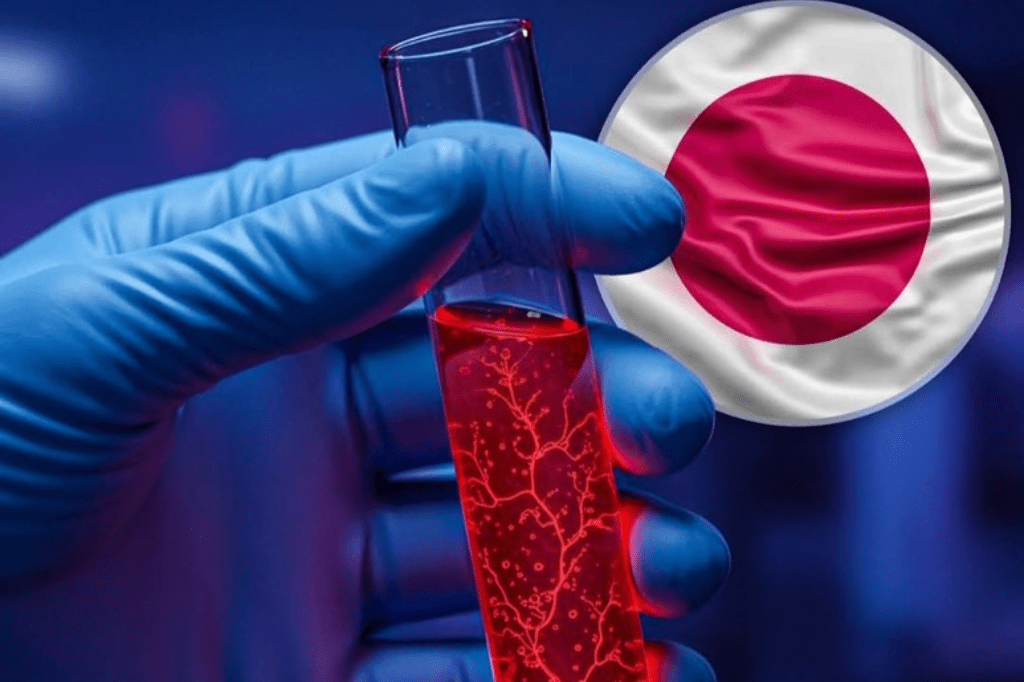
Millions of lives are lost each year by the lack of adequate blood supply, and now Japan is offering hope for the future—universal, virus-free artificial blood. The team at Nara Medical University, led by Professor Hiromi Sakai, has been researching how to create a stable, universally usable blood substitute for the last twenty years, and now it seems they might be entering clinical trials with a look ahead toward nationwide use by 2030. What is this artificial blood, and why is it making headlines internationally?
Why Blood Is So Complicated and So Essential?
Blood is much more than a red liquid coursing through our vessels. It is a living tissue composed of several types of components, each having a unique and irreplaceable purpose in the body:
- Red Blood Cells (RBCs): These comprise about 45% of your blood volume and have just 1 purpose: to transport oxygen from the lungs to the tissues using hemoglobin.
- White Blood Cells (WBCs): the body’s primary defense against infection and disease.
- Platelets: a critical component for clotting and wound healing.
- Plasma: the yellowish liquid that constitutes more than 50% of blood. It carries hormones, nutrients, and waste products.
Again, transfusion science revolves around red blood cells. When a person suffers trauma or undergoes surgery, they may lose red blood cells and may be at risk of bleeding out. Likewise, conditions like anemia or certain cancers negatively affect red blood cell production and these patients may need transfusions to return oxygen-carrying capacity and maintain stable circulation.
Why Artificial Blood Is Important?
Blood transfusions are certainly a part of modern medicine, as a vital component to interventions in surgeries, treatments for cancer, emergency trauma care, childbirth, treatment of anemia, and so on.
However, blood transfusions come with unique limitations. It takes time to match blood types, ensure the donated blood is clean, and store the full range of blood types after donation. The World Health Organization (WHO) claims that the demand for blood is higher than the supply around the world and this is only going to grow, especially with the world facing war, poverty, and disasters.
Additionally, with blood donations, we must consider the limitations:
- They require blood type matching
- They have a limited lifespan (red blood cells are valid for about 42 days).
- There is always a risk of transfusion-transmitted infections.
- They need very strict cold storage and logistics. This makes it difficult in remote areas or regions struck by disaster.
Here is where artificial blood comes in, with the promise to transverse all these potential barriers.
What’s the Science Behind Japan’s artificial blood?
The artificial blood in Japan is derived from hemoglobin vesicles (HbVs). These are tiny vesicles that mimic red blood cells. It is contained hemoglobin – the protein that binds oxygen – extracted from expired donor blood packed in a synthetic lipid membrane. The artificial cells behave much like natural red blood cells, and provide enormous additional benefit.
Here are a few salient extentions of this work:
- No Blood Type: since the artificial blood does not contain blood type antigens, there is no need for compatability testing. Therefore it can be used for any patient with no concerns for blood group type.
- Virus free: since the blood is precessed and sterilized, there is no risk for infections like HIV, hepatitis B/C, or any other transfusion borne illness.
- Extended Shelf Life: Artificial blood can be stored for up to 2 years at room temperature, which is a huge logistical plus—unlike donated blood, which must be used within 6 weeks.
- Oxygen-Carrying Ability: These hemoglobin vesicles, despite being synthetic, can carry oxygen effectively just like natural red blood cells.
The artificial blood is red, but it is actually purplish in color. This is due to the hemoglobin being non-oxidized in storage, and only having oxygen binding activity once it is used per body.
Clinical Trials and What Comes Next
In March 2025, the Japanese research group began the clinical trial with 16 healthy volunteers, who were given 100 to 400 milliliters of the synthetic blood. The aim is to ensure safety, effectiveness, and biocompatibility—ensuring the artificial blood is able to transport oxygen, and not elicit harmful immune responses.
If the trials are successful, it is expected that the Japanese government will have the product available for emergency use and routine medical needs by 2030. If so, Japan will become the first country in the world to usable artificial blood at this scale.
“There is currently no safe and stable substitute for red cells. The need is great,” said professor Sakai.
A Global Impact
Japan’s innovation not only impacts its own people, it has the potential to change the future of emergency care globally. Picture a world in which ambulances, military units, and disaster relief teams are equipped with packs of artificial blood for ready-use transfusions that do not require compatibility testing.
This emerging technology would have significant advantages for:
- Remote health care environments, which have limited access to blood testing and limited blood supply chains.
- Military environments, where injury happens far from access to hospital care.
- Natural disaster environments, where blood supply is sparse and infrastructure has been compromised.
- Countries with developing health care, where there is still significant public health concern regarding access to safe blood.
In each of these instances, artificial blood would dramatically alter the stakes of survival.
Social Media and Scientific Buzz
The news of Japan’s artificial blood is not surprisingly blowing up on social media. Platforms such as X (formerly known as Twitter) and reddit are filled with positive feedback and acknowledgement of the feat accomplished by the Japanese researchers. Many posts are suggesting that the project is actually worthy of a “Nobel Prize” and it is noted almost unanimously that Japan is “pushing the limits of medical science.”
One user commented:
“If this works and is affordable, it’s going to change how emergency medicine is done worldwide.”
Another joked:
“Japanese scientists are really on a roll—with artificial blood, tooth regeneration, and cat longevity shots, they’re basically superheroes.”
What Challenges Remain?
While there is excitement, researchers warn that there are still some hurdles to overcome:
- Production Challenge – Supply of the artificial blood will require large amounts of manufacturer product at sustainable costs.
- Regulatory Challenge – Japan and other locations will need to go through extensive rounds of testing and regulatory approval before being used publicly.
- Acceptance Challenge – There may still be people who are not comfortable with the idea of receiving synthetic blood; education and awareness will be important.
If all of these challenges can be overcome, artificial blood could become as common in emergency bags and kits as an AED or oxygen tank.
Conclusion
Blood usually goes unnoticed until it is most needed. Millions are helped with transfusions every year, while many needlessly suffer due to access problems. Beyond just a technical problem that Japan has solved, artificial blood far represents so much more for so many—hope for the future.
Japanese artificial blood has the potential to change healthcare globally—de-stigmatizing blood types; extended shelf life and risk of infection—where people will have universal access to healthcare in emergencies, disasters, and remote situations.
With trials ongoing and real-world use being scheduled in 2030, we are on the cusp of a world where a synthetic bottle of purplish blood will save lives without reservations, doing what nature intended.
Read about: Are You Having an Identity Crisis or Just Evolving?
 Xorvex
Leave a comment