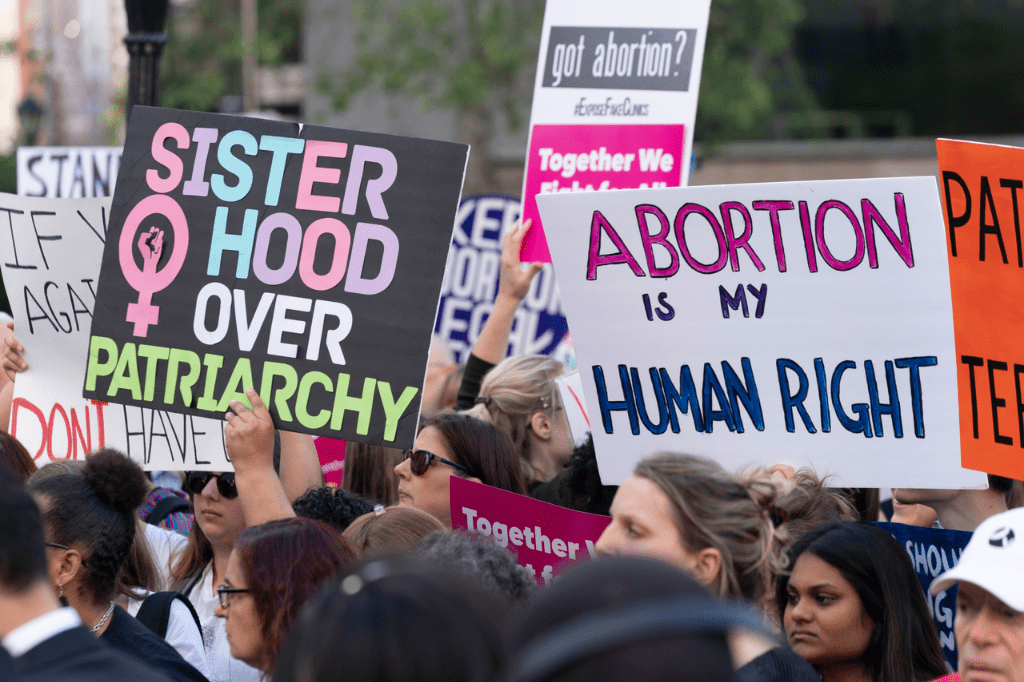
The abortion discussion in the US is more than just a legal or political issue, it comes from disagreements on values around life, liberty, morality, autonomy and faith. Pro choice and pro life are not slogans, they are two worldviews, and people are living their lives through these lenses, including influencing national policy, personal identity, and public conversation.
Since the overturning of Roe v. Wade by the Supreme Court in 2022, the abortion debate itself is more pronounced than it has ever been. There are deeper divides found in states than has been seen in years, and people are constantlybeing asked across all platforms about their position on abortion and our citizens are being asked to reconsider their perspectives and beliefs about reproductive rights and human life.
What Is Pro-Choice?
At the most basic level, the pro-choice position supports a person’s right to make the decision whether or not they wish to carry on with a pregnancy. It recognizes that these decisions are personal, and complicated, and the government should not be involved in them.
In addition to the basic ideology that supports pro-choice advocacy, pro-choice advocates believe in:
- Legal and safe access to abortion.
- Bodily autonomy -person’s ability to make decisions about their own body.
- Protection of privacy in healthcare.
- Supporting people whether they decide on abortion, adoption, and/or parenting.
It is important to understand that being pro-choice does not imply anyone personally would like to choose abortion. Rather, it means they support the legal right for them or someone else to choose for themselves.
Often this viewpoint fits in with an underlying belief of individual rights, gender equality, and faith in an individuals ability to make their informed, personal decision about their own health, family, and future.
What Is Pro-Life?
The pro-life position is that life begins at conception, and unborn fetuses have a right to life that should be afforded the protection of the law. Pro-life advocates consider abortion the taking of a human life, morally and ethically wrong.
Generally we can establish four core beliefs within the pro-life movement:
- The sanctity and intrinsic value of all human life.
- The government has a responsibility to protect the most vulnerable constituents in situtiations like pregnancy; the unborn.
- A personal opposition to abortion with some limited exceptions (i.e. risk of life to mother, rape, and incest).
- Support for alternatives to abortion (adoption) and provision to increase support resources for pregnant people.
For many people in this camp, religious convictions inform their position. The pro-life position is fundamentally grounded in Christian theology, but adherents may come from other faiths or no faith as well.
Key Differences Between Pro-Choice and Pro-Life
While both positions claim to value life and human dignity, they diverge in how they define these concepts and who they believe deserves priority.
| Category | Pro-Choice | Pro-Life |
|---|---|---|
| Focus | Individual autonomy and rights | Protection of unborn life |
| Belief About Abortion | A private decision that should remain legal | A moral wrong that should be restricted or banned |
| Role of Government | Should stay out of private reproductive choices | Should actively protect fetal life |
| View of Fetus | Personhood is debated; emphasis on pregnant individual | Life begins at conception and deserves legal protection |
Political Identity and the Abortion Debate
Political Identity and the Abortion Debate
In American political discourse, the abortion debate has become more divided along partisan lines than in past decades.
Democrats and Pro-Choice Values
The Democratic Party has always considered itself to be the political actor that champions reproductive rights. Most Democratic politicians, including President Joe Biden and Vice President Kamala Harris, consider themselves pro-choice.
The party’s platform states that it will codify abortion rights into federal law, extend access to reproductive healthcare, and oppose any restrictions on access to abortion that impact low-income or marginalized communities through cost, criminality, or stigma.
Kamala Harris has taken a leading role in defending abortion rights, especially after the rollback of Roe v. Wade. Her pro-choice stance has been consistent with her civil rights and healthcare positions.
Republicans and Pro-Life Advocacy
The Republican Party as a whole is associated with the pro-life movement. Most (if not all) of Republican leadership endorses the idea of restricting abortions or banning them altogether. The Republican-controlled states have passed some of the strictest anti-abortion laws in recent years.
Notably, the party’s shift toward implementing strict anti-abortion policy has intensified since the Trump-era when many Republican actors used pro-life credentials to gain support from their base.
Is Donald Trump Pro-Life or Pro-Choice?
Donald Trump’s positions on abortion have changed substantially over the years.
In past interviews—especially one from 1999—Trump had identified as pro-choice and stated that he did not like the idea of abortion but he thought it should be legal. But when he ran for president in 2016, he declared to be pro-life promising to appoint justices who would reverse Roe v. Wade.
That promise was kept when in 2022, his appointments put through a Supreme Court decision that removed federal recognition of abortion rights when they sided with the state’s position in the Dobbs case.
Ironically, Trump has publicly taken credit for banning abortion but even, more recently, has criticized some states passing total bans, calling them too “harsh” and saying exceptions should be allowed. His contradictory position is partly political calculation: there is an advantage to claiming credit for igniting the pro-life base while not alienating scientific and moderate voters.
Where Do Other Public Figures Stand?
Melania Trump
Melania Trump has not usually articulated any critical position on abortion as publicly as her husband’s.
While she has publicly stood by her husband’s presidency and political agenda, there are some contentious reports from former staff about Melania having a relatively moderate viewpoint, and perhaps even being pro-choice. However, there is no clear statement from Melania confirming her position.
RFK Jr. (Robert F. Kennedy Jr.)
Now running an independent presidential campaign, RFK Jr. has a complicated view on abortion. He has expressed support for access to abortion and for individual rights, but complicates matters by saying that he is open to restrictions later in pregnancy.
His stance does not fully support either traditional Democratic or Republican views on abortion, and is more centrist or nuanced.
Other Politicians
- Tulsi Gabbard, formerly a Democratic congresswoman, supports restrictions and yet has defended abortion access generally—leaving her in between the mainstream pro-choice and pro-life camps.
- J.D. Vance, an Ohio senator, has openly stated a pro-life position, with a push for restrictions on abortion.
- Libertarians are (almost) always pro-choice, since their emphasis is on individual liberty and little government involvement in personal choices.
Religious Beliefs: Can You Be Catholic and Pro-Choice?
One topic being discussed relates to whether you can be religious (mostly Catholic) and be pro-choice. The Catholic Church is pro-life (therefore against abortion). But, many practicing Catholics (especially in the U.S.) are pro-choice. This raises moral questions: Can personal beliefs be different than those of the church?
Many who identify as pro-choice Catholics will tell you that, while they will not choose abortion for themselves, they value the autonomy of others to choose abortion for themselves. They view their responsibility as upholding compassion – not control.
This same discussion takes place in varied religious groups – Muslin, Protestant, and Jewish. Religion can inspire different opinions on abortion – strict no to enthusiastic agreement for reproductive justice.
Public Opinion: Where Do Americans Stand?
Generally speaking, Americans are still divided, but trends are revealing some interesting patterns.
- The majority of Americans still support legal access to abortion in at least some cases.
- Polls have shown at least over sixty percent of women identify as pro-choice or want to keep abortion legal.
- Younger generations, particularly Gen Z and millenials, support reproductive rights more vigorously than older generations.
- California, New York and Illinois have made laws to protect abortion, while others like Texas and Alabama have near total bans.
The question “what percentage of Americans are pro-choice or pro-life? reflects this division well. While the exact numbers change depending on every poll, it is usually a close split, bouncing around being 55–65% pro-choice and 35–45% pro-life depending on the questions being asked.
Beyond the Binary: A Range of Beliefs
The issue is not binary for many people, even if the media often portrays it that way. Some people may be personally opposed to abortion but support its legality. Others may support limitations only after some time in pregnancy. Some may support universal access with no exceptions.
This ‘gray area’ illustrates that the real issue is not between the two opposing sides. The real issue is where to draw the line between public morality and personal freedom.
The Legal Aftermath of Dobbs
The Supreme Court’s Dobbs v. Jackson decision in 2022 removed federal protections for abortion, allowing states to set their own laws. Since that decision:
- More than a dozen states have put full or near-total abortion bans into place.
- Several other states, such as Michigan and Vermont, have passed constitutional amendments guaranteeing reproductive rights.
- There are legal challenges regarding medication-induced abortion, out-of-state access, and travel restrictions.
This decentralized legal landscape means that whether someone can access an abortion here in the U.S. now largely depends on where they live.
Conclusion: The Debate Isn’t Over
The pro-choice vs pro-life argument does not solely represents an argument over abortion, it represents power, agency, ethics and control. The debate includes questions like: Who gets to decide what happens to a body? When does life begin? What role does government play in the decision-making process over a person’s health?
Both sides frame themselves as humanity’s champions–the pro-life side is protecting the unborn, while the pro-choice side is fighting for personal responsibility and dignity–and until this nation can figure out how to reconcile these endured beliefs, the debate about abortion will continue to shape elections, laws and lives.
It may ultimately be that the ability to understanding both sides and not just advocate only for one side, is the only way forward.
Read about: What Is a Food Chain and Are Humans at the Top?
 Xorvex
Leave a comment