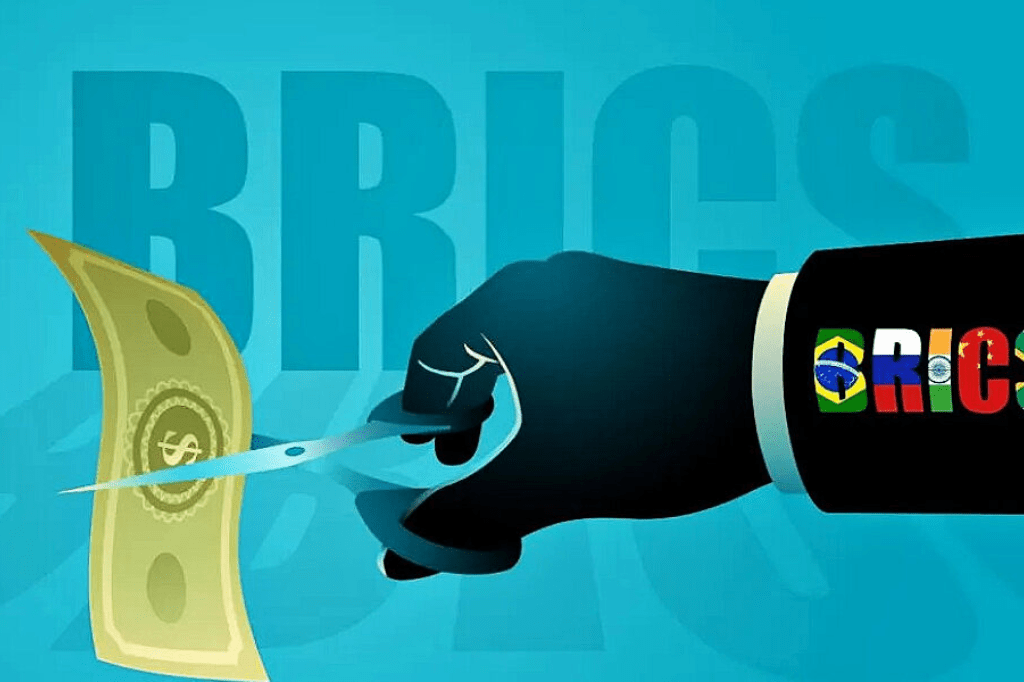
In the past couple of months, one question has dominated the headlines: Did 159 countries abandon the US dollar? With viral posts, searches exploding for “brics currency,” “de-dollarization,” and “countries abandoning us dollar,” it’s clear that global interest is at an all-time high. But what exactly is going on behind the noise? Is the American dollar in trouble? And are we on the verge of a new world reserve currency?
This blog will breakdown the de-dollarization movement, examine the concept of the BRICS currency, answer questions such as “what happens if the dollar collapses?”, and address claims such as “eleven countries abandon dollar 2025”, and the extremely searchable “did 159 countries abandon the US dollar today?”.
What is De-Dollarization?
De-dollarization is the process by which countries want to lessen their dependence on the US dollar (: USD) for international trade and finance. This can happen through:
- Engaging in trade in local currencies
- Developing alternative payments systems
- Decoupling from dollar- denominated reserves
- Partnering with nations who also want to lessen the dollar’s hegemony
De-dollarization is not simply about currency. It is also about sovereignty, sanctions, and an opportunity to break free from a financial system that many countries feel is unfairly biased in favor of the United States.
Countries like Russia, China, Iran, and Venezuela have taken the lead in this effort, especially after being impacted by US-led economic sanctions. More recently, it was reported that Saudi Arabia is in talks to move away from the US dollar, which has created widespread inquiries into the future of the petrodollar.
Why Are Countries Dropping the US Dollar?
Here are the chief rationale’s why nations are engaging in de-dollarization:
- Sanctions and Geopolitical Pressure – Countries like Russia and Iran have already suffered sanctions that have made dollar-denominated transactions precarious to them. By trading in their local currencies, or other substitutes, they have an element of freedom.
- Weaponization of the Dollar – The dollar is often weaponized as a mechanism of political coercion. Many governments now see the dominance of the dollar as a risk rather than an asset.
- Growth of Multipolar Economies – Countries are increasingly forming new alliances, like BRICS, to challenge the financial dominance of the United States in light of the increase influence from China, India, and Brazil.
- Financial sovereignty – Financial transactions in dollars means that countries have the ability to be at the mercy of the policies of the Federal Reserve, especially with policies that may be disadvantageous to their own economic interest.
- Fear of Dollar Collapse – While previously the Fed’s loose monetary policies gave countries cause to reflect upon “Godzilla” marketing, there are now keywords such as “American dollar collapse”, “us dollar devalued”, and “dollar collapsing” which have been trending, demonstrating anxiety about whether the dollar has long-term resiliency.
Let’s build to the viral question: “Did 159 countries drop the dollar?!”.
Did 159 Countries Drop the US Dollar?
It’s time to address the viral thread “did 159 countries drop the dollar?”.
This is an assertion we often see on TikTok or Reddit. But it would be difficult to submit any kind of verifiable economic data to suggest this is true. There is no official “There are 159 countries that dropped the US dollar today” list.
What is happening?:
- Many countries are signing bilateral trade agreements – to trade with local currencies.
- Some countries have decreased their USD reserves.
- Also, countries now belong (or attempt to belong) to regional bloc organization (e.g., BRICS or ASEAN) to strengthen non-dollar bilateral trade.
So, in a slow and real evolution, we are seeing an adaptation, but nothing substantive has happened with a mass exit by 159 countries.
What is the BRICS Currency?
The BRICS nations (Brazil, Russia, India, China, South Africa – possibly Egypt, Iran, Argentina etc.) have suggested the idea of a collective currency to:
- Lower dependence on the USD
- Increase intra BRICS trade
- Possibly form a world reserve currency
Although there is interest in the idea of a currency, the BRICS currency, also called “brics dollar”, “brics money” or “brics coin”, is still being developed.
Currently:
- There is official no BRICS currency
- There are no live exchange rates for brics currency to usd
- Analysts speculate the brics currency could be backed by gold or an index basket of the member countries.
The latest news suggests a pilot or roadmap may be unveiled in 2025 or 2026.
The Role of Saudi Arabia and the Petrodollar
One of the biggest astounds in 2024 was the news of Saudi Arabia dropping the US dollar for oil transactions.
If Saudi Arabia dropped the petrodollar system or dollar oil trade, it could:
- Affect decreasing availability of USD in the world
- Incentivize other oil producers to shift on an exchange-based economy using yuan or rupee
- Increased power for BRICS as a geopolitically ecosystem
While the concerns are serious, often we find many are watching closely asking questions along the lines of “did Saudi Arabia dump the US dollar today?” or “is Saudi Arabia dumping the US dollar in 2025?”.
Currency Substitution News: What’s Actually Happening
There’s more fact than fiction when it comes to currency substitution. Some recent examples include:
| Countries | New Currency Trade Agreements |
|---|---|
| Russia & China | Trade in yuan and rubles |
| India & UAE | Oil deals settled in rupees |
| Brazil & Argentina | Considering a shared currency for regional trade |
| Iran & Russia | Banking system collaboration to ditch USD |
| Indonesia | Trade using local currencies within ASEAN |
These moves are often called “de-dollarization trade routes” and are part of broader BRICS payment system alternatives to the dollar.
Is the US Dollar in Trouble?
In an attempt to assess the concerns of Saudi Arabia’s ditching of the US dollar in oil trade, there is very little evidence that points to the US dollar collapsing.
- The US dollar continues to be 58% of global foreign reserves
- $80 of global trade or >$80% in USD
- Continues to be the reserve currency in the world.
However, we must acknowledge the US dollar is not invincible. Analysts are suggesting we are transitioning to a multi-currency world and the dollar will be just one of a handful of power currencies – while dead, the absolute power is diminishing.
What Happens If the Dollar Collapses?
One of the most emotional questions I always get is, “What would happen if the US dollar collapsed?” But hypothetically if the US dollar collapsed we might see:
- Global recession risk – Any country holding dollar denominated debt would be faced with an enormous disadvantage.
- Surge in Gold and Crypto: Investors would flee to safe haven assets like gold or Bitcoin.
- US domestic crisis:A weakened dollar could lead to inflation, interest rate hikes, and a debt spiral in the US.
- Alternatives will rise: Alternative currencies such as Chinese yuan, the euro, or possibly a BRICS currency could fill the void.
What Is the Reserve Currency of the World Today?
Today, the US dollar is the world reserve currency, with the euro, Japanese yen, and Chinese yuan standing as the first 4.
That said, the possibility the “world reserve currency” could move to a BRICS currency is speculative but doable. Particularly if:
- BRICS adds more than 20 members
- They create a commodity-backed digital currency
- They establish an efficient BRICS payments system as an alternative to SWIFT
Local Currency News: Smaller Countries Join the Shift
- Bangladesh started to settle a portion of their Russian debt in yuan
- Pakistan is investigating barter type deals with Iran
- ASEAN countries have put together proposals for a regional currency
This aligns with the interest in local currency news, with searches on terms like “countries are strengthening trade without US” and “currency substitution news.”
Conclusion
Although the claim that “159 nations dropped the US dollar” is overstated, it captures a growing trend of de-dollarization across the globe. Countries are increasingly using local currencies, forming trading blocs, and decreasing their dependency on the dollar in order to protect their economies from sanctions or geopolitical circumstances.
At the epicenter of this transition is the proposed BRICS currency, which marks a shift toward a more multipolar financial system. While the US dollar still dominates the global economy, it is being challenged. What we are witnessing is not a collapse, but a systematic rebalancing of economic power worldwide.
Read about: Why Fintech Is the Fastest Growing Sector in Finance Today?
 Xorvex
Leave a comment