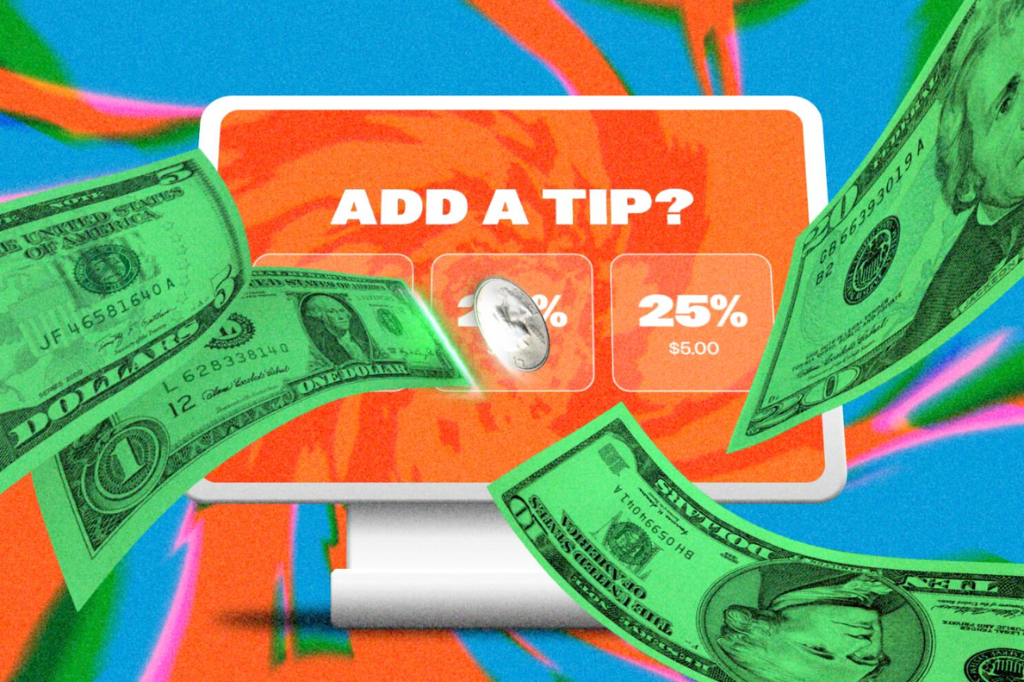
Whether it’s grabbing a coffee before work or enjoying a night out at a fancy steakhouse, tipping has become an expected, and often confusing, component of modern service experiences. This is especially true in the United States, where tipping culture in America has become increasingly controversial.
As more people across Reddit and social media have debated whether the tipping culture has gotten out of control, it’s time to explore how tipping works worldwide, why the American tipping system seems to be broken, and where we might head from here.
What Is Tipping Culture?
Tipping culture refers to the social conventions and expectations around giving extra money, a “tip”, to service workers, typically as a reward for good service. In the United States and some parts of Canada, tipping has shifted from an act of generosity to an act of obligation. And to add to the confusion of tipping in North America, customs around tipping vary widely around the world, so understanding those variances is important to understanding the argument.
How Tipping Culture Started?
Tipping originated in Europe in the 1600s as a practice of showing off riches among aristocrats. It arrived in the U.S. in the 19th century and spread like wildfire in the post-Civil War U.S., often to avoid paying full salaries to workers, especially Black workers.
American tipping culture is now institutionalized, where many service workers are below minimum wage, and rely heavily on tips to survive.
Tipping Culture in the USA: Generous or Exploitative?
Few countries embrace tipping like the U.S., or create as much controversy. American tipping culture is often referred to as extreme or even toxic. Here are the reasons why:
- Workers can earn as little as $2.13/hour in some states (before tips).
- Consumers are asked to tip at almost every checkout, even when self-service or at the counter.
- Tipping screens are suggesting 20–30%, even for mediocre service.
- Many customers feel guilty for not tipping — contributing to the feeling that, “tipping culture is out of control.”
Whether you are getting coffee or getting your nails done, tipping has transitioned from voluntary to compulsory — and this has ruffled the feathers of many.
Tipping Culture in Canada
Canadian tipping culture is generally similar to tipping culture in America, but with a few key differences. Generally speaking, servers can earn a higher base wage, but tipping 15 – 20 % is still an expectation in restaurants, salons, and taxis. Yet, tipping fatigue is beginning to hit Canada, as Canadians are more frequently asking themselves why they are tipping for take-out or at the counter at fast-food restaurants.
How Tipping Culture Differs Around the World?
Tip culture differs around the world. In some countries, a tip is a token gesture, while in others a tip isn’t expected at all. Here are some examples of how tipping works:
Japan
- Tipping is not expected.
- It may be seen as rude or insulting.
- Service is a source of pride and is not considered a reward.
United Kingdom
- Tipping is optional for service in the restaurant; sometimes a 10% service charge is included in your bill.
- Tipping at pubs, cafes, or taxis is not the norm.
- The UK is polite tipping culture, but not forceful.
France
- Service charge is included in the bill (service compris).
- A small tip of an extra 5–10%, while appreciated, is never expected.
- Tipping in France focuses on fair wages instead of tipping.
Mexico
- Generally common tipping (around 10-15%) in restaurants.
- In tourist areas, they may be expecting typical US-style tipping; ie, Big tips.
- Some low wages and tips are a significant part of workers’ income.
Italy
- Tipping is rare; just round up or leave a euro or two is a normal practice.
- Many bills include “coperto” (cover charge).
- Too many tourists overtip from habitually tipping in the USA.
Tipping Culture on Reddit and Social Media
Reddit’s threads on tipping culture have demonstrated a common frustration by many, especially in the United States. People are asking:
- “Why am I tipping more while companies are paying less?”
- “Is this generous, or are Americans simply subsidizing lower wages for other businesses?”
- “Are we going to start boycotting, or move to remove tipping altogether?”
These discussions illustrate that tipping has become something much larger than an issue of dollars and cents — it’s become an ethical issue regarding fairness, equity, and changing social norms.
Is It Time to Rethink Tipping?
In Europe and parts of Asia, equitable pay is prioritized rather than tipping. Moving the U.S. in that direction would require legislative remedies regarding the elimination of sub-minimum wages, business models that pay employees fairly, and consumer acceptance of higher menu prices instead of tipping prompts.
The climate is shifting, especially with the awareness gained by global travellers who are learning what acceptable tipping culture looks like in different places such as Japan, UK, or Canada. There is a growing call to move on from tipping culture, or at least reform it.
Conclusion
No matter what you perceive it to be, as a generous culture tradition or an antiquated, exploitative culture, tipping culture may be reaching its limit. From controversies in American tipping culture, to calm, tip-optional norms in Japan and Europe, there is one reality – the world is divided on probing and better discussing tipping, and the time has come!
Read about: Clean Your Plate Psychology: Why We Overeat Even When We’re Full?
 Xorvex
Leave a comment