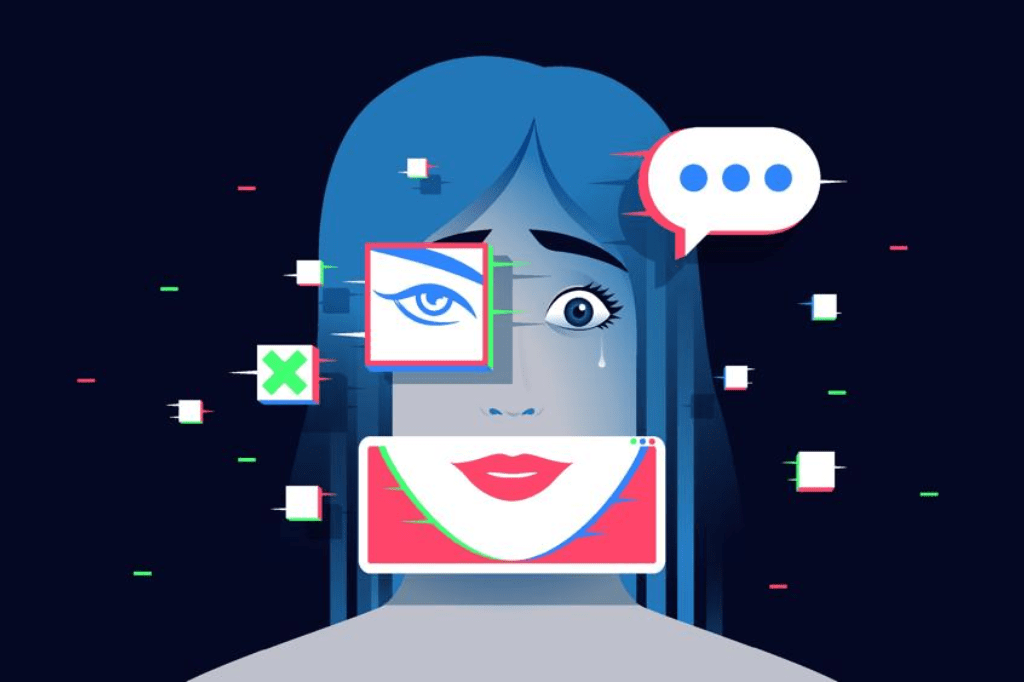
In a world where artificial intelligence is changing communication and media, deepfakes have become a powerful yet contested medium. While deepfakes have legitimate usages in film, gaming, and education, in some circumstances, they are being used by cybercriminals. But what is a deepfake, and why are governments, businesses, and other malicious actors using it?
What is a Deepfake?
The term “deepfake” is a portmanteau of deep learning and fake. This term describes synthetic media (usually videos or images) that use AI to realistically swap faces or replicate a person’s voice and mannerisms.
Deepfake technology uses machine learning models like GANs (Generative Adversarial Networks) and autoencoder, to analyze patterns of real images or audio and reproduce them accurately. This results in a highly believable digital impersonation, convincing enough to deceive the human eye, and often can go undetected by some kinds of software.
What is Deepfake Technology used for?
Originally created for creativity and entertainment, deepfakes are now found across multiple applications including:
- Hollywood using deepfake technology to resurface actors or recreate historical figures.
- Education and marketing incorporate AI avatars (or digital twins) into their presentations.
- Gaming improvements using voice replication to create an immersive experience.
Though there are legitimate usages, they are being used with malicious intention in, but not limited to, identity fraud, revenge porn, fake news stories, and financial fraud.
What are Some Possible Reasons Cybercriminals Might Use Deepfakes?
Cybercriminals see deepfakes as a means to commit crime for a couple of strategic reasons:
1. Phishing 2.0 – Video and Audio Spoofing
With the increasing awareness of phishing emails, it is much easier today to identify phishing emails. A video or voice note, purported to be from your “boss,” requesting urgent money transfers? Much harder to ignore. As a vehicle to elevate social engineering, deepfakes make social engineering more terrifyingly effective.
2. Impersonation and Identity Theft
The potential for a cybercriminal to use a deepfake to persuasively impersonate:
- A CEO (to pervade financial fraud)
- A government official (to spread disinformation)
- A spouse/friend (create trust)
This leaves the door open for wire fraud, data theft with the potential of blackmail.
3. Deepfake Pornography and Harassment
Some of the most destructive uses are found in sexually explicit deepfake pornography, and especially those targeting women and public figures. Generally used for harassment purposes, revenge, or gain a monopoly for extortion.
4. Political propaganda and Disinformation
Deepfakes have been used to:
- Create fake remarks from political leaders.
- Enable misinformation and/or disinformation prior to election
- Produce false evidence in legal or political disputes
5. Stock Market Manipulation
Imagine a deepfake video of a CEO announcing their company is bankrupt. Less than a day of media rush around the video could easily result in a stock price drop—allowing the scammer to profit from short selling.
6. Bypassing Biometric Security
Cyber criminals are using hyper-real deepfakes to:
- Deceive facial recognition software
- Deceive voice authentication
This puts both sensitive data, and access controls at serious risk.
How Are Deepfakes Made?
Making a deepfake:
- Gathering a collection of images or video of the target.
- Training an artificial intelligence (AI) model based on this data.
- Using software to swap faces or voices on a new video/audio file.
Tools such as DeepFaceLab, FaceSwap, and Stable Diffusion have made this process easy for anyone to do, even for amateurs.
Are Deepfakes Illegal?
In the U.S.:
Deepfakes are not universally illegal, but illegal through certain uses, such as impersonating another individual for the sake of fraud, and the creation of non-consensual pornography.
A few states have passed laws prohibiting the use of deepfakes in political campaigning, and other states ban deepfakes that are revenge porn.
Across the World:
Laws are evolving. Countries like the UK, China, and South Korea have proposed restrictions to combat misuse of deepfake technologies.
Are Deepfake Pornography Legal?
Yes, in most jurisdictions. If someone creates a deepfake pornography without permission from the subject of the video, it is a form of image-based sexual abuse that is illegal in many states and countries. Enforcement against these types of exploits is still developing.
Are Deepfakes Mirror Websites Safe?
Another emerging trend is users searching for “deepfakes mirror websites” – alternative domains where users believe they can find banned or restricted deepfake content (usually adult content with celebrities).
These sites are very unsafe!
- Most are infected with malware or spyware that can compromise private data.
- Others are phishing networks posing as legit sites.
- Using or sharing non-consensual deepfake content is usually illegal, and in practice, it is more than likely to be tracked.
Visiting someone else’s mirror site not only infringes on their privacy but can also expose yourself to legal trouble and cybersecurity risk.
How To Spot A Deepfake
Spotting a deepfake can be more difficult than ever, but looks for:
- Unnatural blinking
- Weird facial movement
- Inconsistent lighting/shadows
- Blurred lines at the edges of the face
- Kind of weird or robotic voice modulation
Several tools like Microsoft’s Video Authenticator, Sensity AI, and Deepware Scanner are now used to detect fakes.
What Does This Mean for the Average Internet User?
You may not directly become the victim of a deepfake, but your data, voice, or images can still be taken and used to create a deepfake. It’s important to:
- Keep social media private.
- Avoid oversharing personal media.
- Be sceptical of unexpected video calls and voice notes.
What are the Steps to Deepfake A Face Onto a Video?
One of the top asked questions online is: How to deepfake a face onto a video? The steps for this have gone from rarely being used (by only advanced users) to open to various platforms and tools:
- Face Collection: Collect a variety of images or videos of the target person’s face, from various angles and lighting situations.
- Model Training: Use DeepFaceLab, FaceSwap or Avatarify to train a model to recognize and recreate that face.
- Overlaying: With the trained model, you can now overlay that artificial, fake face onto a target video, synchronizing facial expressions and mouth movement, and lighting conditions to create the most realism as possible.
Now you can find all of this on the internet in tutorials and on forums, and even on YouTube. Creating these emotional faking videos has never been more accessible to the average user, regardless of if they are tech-savvy or not, which opens major ethical and legal questions.
Conclusion
Deepfakes illustrate the two-sided nature of AI. While there are creative possibilities for the content, there are also strong opinions on behalf of cyber criminals to deceive, trick and exploit. There is a frantic race between detection tools and regulation and in the meantime awareness is our best defence.
If there is something wrong (even though it looks right), pause, verify and report.
Read about: What Is Self-Sabotaging in Relationships?
 Xorvex
Leave a comment