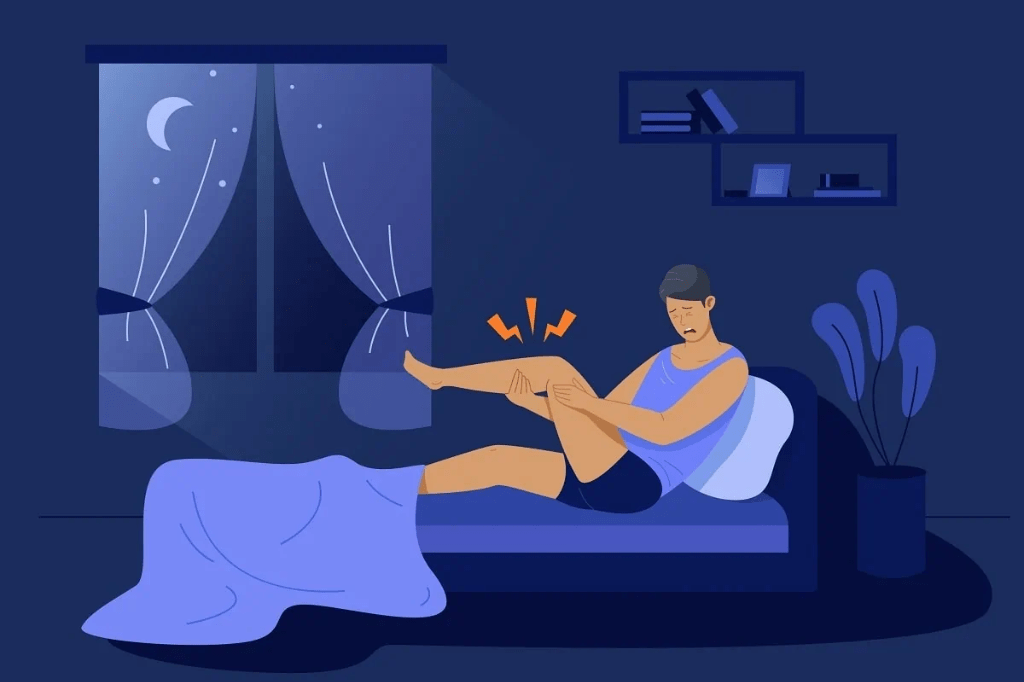
Waking up with sore legs or discomforting just as you are settling down to sleep can be bothersome. But nighttime leg pain can alert you to other issues. Nighttime leg pain is more common than you may realize. It affects both the young and the old for a variety of reasons. Understanding the source of your pain is critical to managing it better.
Common Causes Why Legs Might Hurt at Night?
1. Restless Leg Syndrome (RLS)
RLS is a neurological condition that causes an urge to move your legs. This movements are typically worsened in the evening or at night. You may not feel able to relax or sleep because of RLS.
2. Nocturnal Leg Cramps
Sudden painful muscle contractions which can occur often in the calf muscles are usually the worst at night and can wake you up. Often this is due to dehydration, muscle fatigue, or sitting too long in the same position.
3. Peripheral Artery Disease (PAD)
PAD occurs when arteries are narrowed and then restrict blood flow to your limbs. If you have nighttime leg pain or numbness in your foot or calf area, you may be suffering from poor circulation.
4. Varicose veins
Varicose veins can be swollen and tortuous and painful or throbbing after a long day of standing. The pain may often worsen at night.
5. Sciatica or Nerve Compression
If you have compression of the sciatic nerve or any spinal nerves, you may feel sharp or burning pain in your legs, especially when lying flat.
6. Overexertion or Muscle Strain
Whether leg workouts, running, or standing for extended times the likely delayed muscle soreness will usually be most prevalent at night time.
How to Prevent and Relieve Nighttime Leg Pain?
- Stretching Before Bed: Gentle stretching of the calf and hamstring may help decrease the risk of cramping.
- Staying Hydrated: Drinking sufficient amounts of water daily will help you balance out your electrolytes.
- Elevating Your Legs: Elevation will promote circulation and hopefully decrease any swelling or soreness in your legs.
- Wearing Compression Socks: Compression socks can assist in the management of Varicose veins and Venous insufficiency.
- Consult a Physician: If you have ongoing pain, it may be indicative of lower limb vascular insufficiency/ ischaemia ie PAD or some form of neuropathy.
When to See a Doctor
If your nighttime leg pain is:
- Chronic
- Severe or becoming worse
- Accompanied by swelling, warmth or redness
- Often disrupting your sleep
You should consult a health care provider for a full assessment and plan.
Frequently Asked Questions
1. Why do my legs feel heavy at night?
The sensation of heaviness can be a sign of poor circulation or fluid retention. Heavy legs are usually a sign of venous insufficiency or sitting too long.
2. Can dehydration cause leg pain at night?
For sure. Dehydration will decrease some of the electrolytes such as magnesium and potassium that are needed for muscle function , this deplete can lead to cramps and spasms in some cases.
3. Is it ok that my growing child has leg pain at night?
Growing pains are very common for children aged 3 to 12. Usually they come in the evening or night and can be in both legs.
4. Can medications cause leg pain at night?
Yes, statins (which are for lowering cholesterol), diuretics and some blood pressure medications may promote muscle pain or cramps.
5. Can anxiety and stress really cause nighttime leg pain?
Stress may lead to increased muscle tightness and can also indirectly lead to feeling soreness in the legs. It can also exacerbate RLS symptoms.
6. Why do my legs hurt more when I’m lying down?
It is possible that there is less blood flow or perhaps nerve compression that is worse when you are lying down. Sciatica or maybe some vascular insufficiency may be responsible.
Conclusion
Nighttime leg pain can be the result of something as simple as dehydration or could be as serious as a circulatory disorder. By identifying the root cause, you can take meaningful steps to manage the pain and get a good night’s rest.
Read about: Why Does My Tooth Filling Hurt After Months?
 Xorvex
Leave a comment