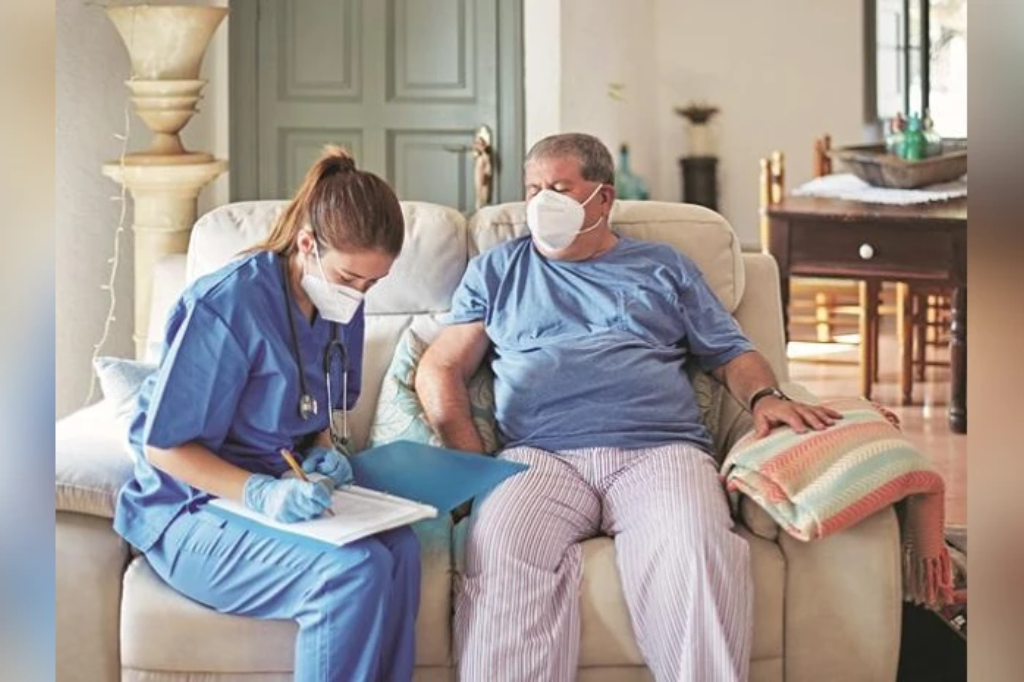
As healthcare progresses into a new era, one significant change is shifting the healthcare experience from clinical settings to the comfort and safety of our homes. At-home healthcare is becoming more efficient, accessible, and personalized than ever thanks to the rapid evolution of technology.
From remote monitoring to AI-enabled diagnostic technologies, innovators are redefining how patients receive healthcare services.
Why is at-home healthcare becoming more popular?
Aging population, rising healthcare costs, and patients being able to receive care in environments they are comfortable in (like home) are the main reasons for this latest surge in demand for at-home healthcare services.
COVID played a significant role as well in allowing adoption of telehealth technologies and remote monitoring services demonstrating that patients can receive quality services, even when not in a clinical setting.
What technologies are improving home-based care?
- Remote Patient Monitoring (RPM): Devices such as blood pressure monitors, glucose meters, and wearable ECGs enable care teams to keep track of patients in real-time.
- Artificial Intelligence & Machine Learning: Same as above but in order to analyze large amounts of data, AI can help predict complications and provide individualized care plans faster and more efficiently, while the same machine can help detect data about early diagnosis.
- Telehealth Platforms: virtual appointments save time and hassle of travelling to an appointment. Telehealth also has proven to keep individuals at risk of infections safe from COVID-19.
- Smart Home Devices: These devices, such as voice assistants, fall detection sensors, and medication reminders will allow safety for disabled or elderly patients.
- Mobile Health Apps: Applications allow patients to monitor symptoms, make an appointment, or receive consultation with professionals 24-7.
How does AI support home healthcare?
AI can play a key role in today’s home healthcare:
- It can identify abnormalities in vitals.
- It assists with triaging symptoms through chatbots.
- It provides caregivers with recommendations based on patient data.
- It can allow for smart diagnostics through connected devices.
Can smart devices really replace hospital visits?
Not completely, but it can lessen the number of in-person visits. Non-emergency chronic illnesses, post-operative recovery, mental health tracking, etc., can be done through remote access. More complex or emergency situations still need to be assessed by clinicians.
What are the benefits of future home healthcare?
- Convenience: No commute and no waiting rooms.
- Cost: When patients do not go to the hospital (less hospital admissions), care will cost less.
- Customized: Care is irrelevant to a patient’s unique circumstances each patient has different needs and environments.
- Increased Adherence: In many cases, patients use technologies to be reminded to take medications or taking action upon completing assigned daily tasks.
- Improved Quality of Life: Patients feel more comfortable and in control in many situations that does allow them to stay home.
Frequently Asked Questions:
1. Is home care covered by insurance?
Insurance coverage for home care ranges by provider and country, but numerous insurers are expanding their telehealth and remote monitoring services.
2. Are at-home tests accurate?
Yes, there are many FDA-approved equipment that can give hospital-level accuracy, if the device is used properly.
3. What are the challenges with at-home care?
Challenges include:
- Tech accessibility and literacy
- Limited emergency response tendency
- Risk of misdiagnosing patients due to no professional physical examination
4. Can elderly patients adapt to using this technology?
Yes, with the appropriate support, training, and a proper learning environment, many seniors are already using devices such as smartwatches, medication alarms, and video calling apps.
5. How will future tech facilitate privacy in home healthcare
Sophisticated encryption, secure cloud storage, protection under laws like HIPAA and GDPR from lawsuits or breaches of privacy go along way to ensuring patient data stays private.
Conclusion
The future of healthcare has no facility-like barriers to being in a hospital or a clinic. With the tremendous advances in technology, patients can now meet all their healthcare needs from the comfort of their own homes.
The result will be better patient outcomes and empowerment. As future innovations unfold, the traditional line separating clinical care from home care will continue to erode.
Read about: Do Colleges Check for AI in Application Essays?
 Xorvex
Leave a comment